Expert Meeting on “Evaluating the Institutional Model of Smart Transformation in Iran: From Situation Analysis to a Proposed Framework”
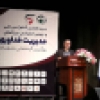
A specialized meeting titled “Evaluating the Institutional Model of Smart Transformation in Iran: From Situation Analysis to a Proposed Framework” was held on Monday, October 6, 2025 (14 Mehr 1404) at the Technology Studies Institute (TSI).
The session aimed to foster dialogue and exchange of ideas among experts and decision-makers in the fields of smart governance, digital transformation, and smart transformation.
At the beginning of the session, Dr. Seyed Mohammad Hossein Shojaei, Vice President for Research at TSI, welcomed the participants and introduced the Institute’s missions and activities. He emphasized the importance of smart transformation as one of the key drivers of the nation’s sustainable development, noting:
“Achieving smart transformation requires an institutional mechanism capable of creating synergy, coordination, and integration in decision-making at all levels across the country.”
Dr. Shojaei added that, given the significance of this topic, the Institute has supported a research project centered on the Smart Transformation Authority, and that this meeting was convened to benefit from the insights of experts, practitioners, and policymakers in completing the project.
Following this, the project manager outlined the progress of the study. In the first phase, the current state of smart transformation in Iran was analyzed from institutional and functional perspectives; the second phase examined successful international experiences; and the third phase, currently underway, aims to design an appropriate institutional–functional model tailored to Iran’s context.
Mr. Amin Gharibie, CEO of Nexel and Chair of the Smart City Commission of the Tehran ICT Guild Organization, presented key findings from the first two phases. He explained that the analysis revealed that efforts in Iran related to smartization, digital transformation, and smart transformation have often been fragmented, isolated, and lacking institutional coherence.
He emphasized that a Smart Transformation Authority should be established as the central coordination, regulatory, and steering body of this ecosystem. Mr. Gharibie also underlined the need for effective mechanisms to ensure collaboration among government, the public sector, private sector, and academia, stating that smart transformation can only be achieved through data-driven governance and genuine stakeholder participation in decision-making.
In the final part of the session, a number of university professors, urban managers, government representatives, and private-sector actors shared their perspectives and suggestions regarding the institutional requirements, appropriate structure, and governance model of a national Smart Transformation Institution.
Participants stressed the need for a coherent national approach, highlighting the formation of such an institution as a connecting link between policymaking, implementation, and innovation. They proposed recommendations concerning the organizational structure, decision-making systems, and multi-level collaboration models, while also cautioning against establishing new bureaucratic structures or repeating unsuccessful experiences such as creating additional ministries or agencies.
It is worth noting that this meeting was part of the research project titled “A Functional Institutional Analysis of Smart Transformation in Iran with Reference to Global Experiences.” The discussions and conclusions from the meeting will contribute to the development of the final proposed institutional model for smart transformation governance in the country.